English
  Türkçe


Blind Riveting: A Fast, Reliable, and Efficient Solution
When access to both sides of a workpiece is limited, blind rivets provide an efficient and reliable fastening solution. This article explores the advantages of blind rivets, their working principles, and the tools required for proper installation.
Advantages of Blind Rivets
Unlike traditional solid rivets, blind rivets offer several benefits:
One-Sided Installation: They can be installed from a single side, making them ideal for tight spaces.
Time-Saving: Faster and more efficient compared to traditional riveting methods.
Strong and Durable: Provides a secure and long-lasting connection.
Versatile: Used in various industries, including aerospace, automotive, construction, and electronics.
Blind riveting was originally developed to replace solid rivets in repair applications. Before blind rivets became common, aircraft assembly required two workers—one operating a rivet gun and the other holding a bucking bar. This process was inefficient, especially in hard-to-reach areas.
A Brief History
- Invented in Scotland before World War I and later improved by American inventors Carl Cherry and Lou Huck.
- First used in the automotive industry during the Great Depression.
- Patented in the U.S. in 1939, making mass production of military aircraft possible in World War II.
How Blind Rivets Work
A blind rivet consists of two main components:
1️ Rivet Body – A hollow tube with one pre-formed end.
2️ Mandrel – A strong pin inside the rivet body.
Installation Process:
Insert the rivet into a pre-drilled hole.
Pull the mandrel using a special tool, expanding the rivet on the blind side.
The mandrel breaks off at a designated tension point, securing the connection.
Because blind rivets can be installed from one side, they are indispensable in applications where backside access is restricted.
Types of Blind Rivets
Blind rivets come in various materials, sizes, and head styles. The two main categories are:
Pull-Type Rivets – Have an integrated mandrel that expands the rivet body.
Drive-Pin Rivets – Fastened by driving a pin into the rivet body.
Common Blind Rivet Types:
- N-Type (Nail Rivet): Lightweight and breakable mandrel.
- Q-Type: Serrated mandrel for increased shear strength.
- T-Type (Split Rivet): Expands into three parts, ideal for soft or composite materials.
Material Selection
Choosing the right material ensures durability and resistance to environmental factors:
Steel Rivets – Maximum strength.
Aluminum Rivets – Corrosion-resistant.
Plastic Rivets – Lightweight but prone to brittleness over time.
Key Selection Criteria
Before selecting a blind rivet, consider:
Strength Requirements – Determine the necessary tensile and shear strength.
Material Compatibility – Prevent failures due to corrosion or fatigue.
Grip Range – Ensure the rivet length matches material thickness.
Hole Size – Incorrect sizing can lead to weak connections.
Head Type – Options include dome, large flange, and countersunk heads.
Tools for Installation
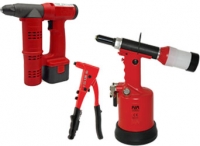
To install blind rivets, you need a tool that grips and pulls the mandrel. Options include:
Manual Tools – Best for small rivets and low-volume applications.
Pneumatic Tools – Provide high pulling force for industrial use.
Hydraulic Tools – Suitable for heavy-duty applications.
Automated Systems – Improve efficiency in mass production.
Some advanced tools come with vacuum systems that collect broken mandrels, simplifying cleanup.
Common Issues and Solutions
To ensure maximum performance and avoid installation errors, follow these tips:
Place the rivet against the thicker material for optimal load distribution.
Allow enough space on the blind side for proper expansion.
Use the correct hole size to prevent mandrel pull-out problems.
Avoid placing rivets too close to edges to prevent structural weaknesses.
Opt for closed-end rivets to avoid issues with liquids or vibrations.
Conclusion
Blind rivets offer a fast, efficient, and reliable fastening solution across many industries. Selecting the right rivet type, material, and installation method ensures strong and long-lasting connections. Because of their versatility, blind riveting technology remains a critical fastening method in modern manufacturing.
perçin, kör perçin, pop perçin, perçin aletleri,